

Introduction
Imagine a student who has heard about SEO, Google Ads, social media marketing, and AI tools but has never actually used them. They may understand that digital marketing is an exciting career field, yet still wonder where to begin, which skills to learn, and how to gain the confidence needed to work on real projects.
This is a common challenge for beginners entering the digital marketing industry. The internet offers countless tutorials, courses, and certifications, but learning individual tools is not always the same as understanding how marketing works as a whole. A beginner may know what SEO stands for but still struggle to optimize a website. Someone may understand the basics of paid advertising but have difficulty planning a campaign or interpreting its results.
This is where structured digital marketing education can become valuable. A suitable digital marketing institute can help learners move from basic concepts to practical application, provided the training includes relevant skills, meaningful assignments, and opportunities to learn from feedback.
One institute worth exploring in this context is DGmark Institute. Its official website presents a practical, industry-focused learning approach, with training areas that include SEO, Google Ads, social media marketing, AI tools, and other digital marketing skills. The institute also highlights live projects, mentorship, and career-oriented support.
But what does it actually take to move from a beginner to an industry-ready professional? And what should students consider before choosing a digital marketing course?
This article explores the learning journey, the skills that matter, and how DGmark Institute’s published approach may fit the needs of aspiring digital marketers.
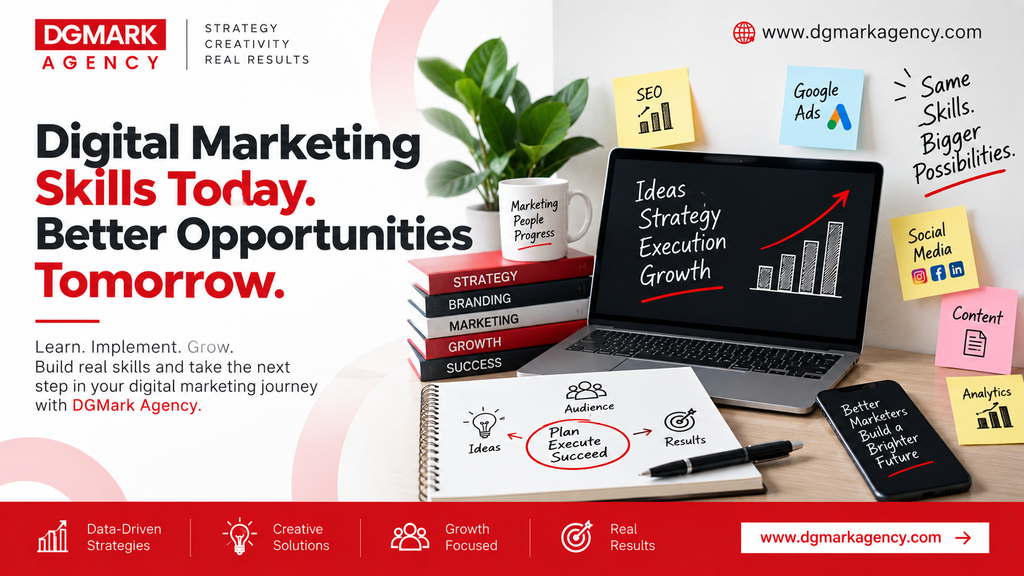
Why Digital Marketing Skills Matter in Today’s Career Landscape
Digital marketing has become an important part of how businesses communicate with customers. Whether a company wants to increase website traffic, generate leads, promote a product, or build brand awareness, digital channels can play a role in its marketing strategy.
For learners, this creates opportunities to develop skills across several areas. However, the field is not limited to one platform or one job role. A digital marketer may work on search engine optimization, paid advertising, social media content, email campaigns, website performance, or marketing analytics.
The broader the understanding, the easier it becomes to see how different activities connect.
For example, a business may use SEO to attract people searching for a product, Google Ads to reach potential customers quickly, and social media to build awareness. A landing page can then help convert that interest into an inquiry or purchase. Analytics can show which activities are producing results and where improvements may be needed.
A beginner who understands this connection is better prepared to think beyond individual tools.
Digital Marketing Is More Than Learning Software
One of the biggest misconceptions about digital marketing is that becoming a professional simply means learning how to use a few platforms. In reality, tools are only part of the learning process.
A student may learn how to create an advertisement, but also needs to understand:
- Who the target audience is.
- What the campaign is trying to achieve.
- Why a particular message or offer is being used.
- How the budget should be considered.
- Which metrics indicate success.
- What changes might improve performance.
The same principle applies to SEO, social media, and content marketing. Practical knowledge becomes more valuable when learners can explain why they are making a particular marketing decision.
Why Beginners Need a Structured Learning Path
Self-learning can be useful, but it can also become confusing when there is no clear sequence. A beginner may jump from SEO tutorials to Meta Ads, then to website design, without understanding how the subjects fit together.
A structured digital marketing course can help organize the learning journey into manageable stages:
- Understand the fundamentals.
- Learn the major digital marketing channels.
- Practice individual skills through assignments.
- Apply multiple skills to a practical project.
- Review results and improve the work.
- Build a portfolio that demonstrates what has been learned.
This progression does not guarantee a job or business success, but it can help learners develop a stronger foundation.
The Growing Importance of Practical Skills
Digital marketing is a field where practical experience matters because many skills are connected to real-world decisions. A marketer may need to research keywords, write ad copy, create content, analyze data, or improve a landing page.
For this reason, students should look for training that goes beyond lectures. Practical assignments can help them understand how concepts are applied, while projects can provide an opportunity to bring different skills together.
DGmark Institute’s official website emphasizes practical training, live projects, and industry-oriented learning as part of its approach.
The next step is to understand what makes a digital marketing institute worth considering—and how learners can evaluate whether a particular course is right for them.
What Makes a Digital Marketing Institute Worth Considering?
Choosing a digital marketing institute is an important decision because the quality of training can influence how confidently a learner applies new skills. However, the right institute is not necessarily the one with the longest course or the most impressive advertising. It is the one that offers a learning experience suited to the student’s goals.
For someone starting from zero, a useful course should explain the fundamentals clearly and then provide opportunities to practice. For a working professional, flexible timings and relevant modules may matter more. For an aspiring freelancer, portfolio development and client-oriented skills can be especially useful.
Before enrolling, learners should consider the following factors.
1. A Curriculum That Covers the Right Skills
A digital marketing course should provide a clear understanding of the major marketing channels. These may include SEO, Google Ads, social media marketing, content marketing, website fundamentals, analytics, and AI tools.
The goal is not to learn every tool available. It is to understand the purpose of each channel and how it contributes to a marketing strategy.
For example, SEO focuses on improving organic visibility, while paid advertising helps businesses reach audiences through targeted campaigns. Social media can support brand awareness and engagement, and analytics helps marketers evaluate performance.
A well-structured curriculum should help learners understand these differences rather than treating every platform as an isolated subject.
2. Practical Assignments and Projects
Theory is necessary, but digital marketing is also a practical field. Students should look for opportunities to apply what they learn through assignments, campaign exercises, website work, content creation, or other relevant projects.
Practical work can help learners develop problem-solving skills. It also gives them something concrete to discuss during interviews or when approaching potential clients.
DGmark Institute’s official website highlights practical implementation, assignments, live projects, and portfolio creation as part of its training approach.
3. Experienced Trainers and Useful Feedback
A trainer’s role is not limited to explaining a topic. Good guidance can help students understand mistakes, improve their work, and connect theory with real marketing situations.
Learners should consider whether trainers have relevant industry experience and whether the course provides opportunities to ask questions and receive feedback.
4. Career Support and Learning Flexibility
Career support can be useful for students who need help preparing resumes, interviews, or portfolios. However, learners should understand exactly what the institute offers rather than assuming that every course includes the same services.
DGmark Institute’s published course information includes career-oriented support such as resume building, interview preparation, and internship-related learning.
5. Transparent Course Information
Before making a decision, students should check the current course duration, fees, training format, syllabus, and admission terms. Clear information makes it easier to compare different institutes and choose a program that fits their needs.
The official DGmark Institute website publishes details for its classroom and online programs, including course formats and program information.
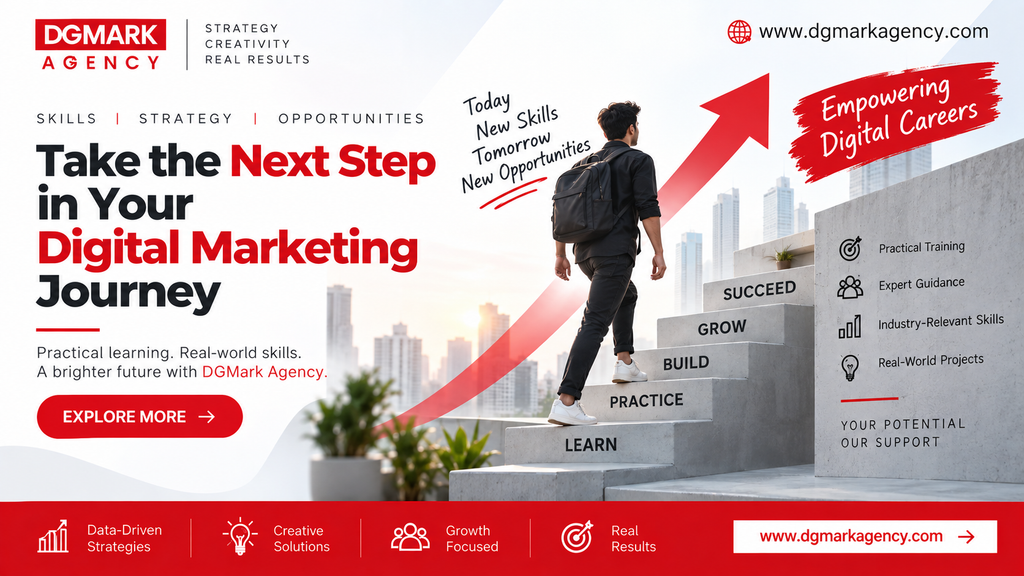
DGmark Institute: A Closer Look at Its Learning Approach
DGmark Institute is presented on its official website as a digital marketing training provider focused on practical, industry-oriented learning. Its published programs cover areas such as SEO, Google Ads, social media marketing, performance marketing, AI tools, and marketing analytics.
For beginners, this broad approach can be useful because digital marketing involves several connected skills. A student may start with the basics of SEO, then learn how to create a website, develop content, and understand how analytics can be used to evaluate performance.
The institute’s website also highlights live campaign execution, real projects, and expert mentorship.
Learning Through Practical Implementation
One of the most important aspects of digital marketing education is the opportunity to apply knowledge. DGmark Institute’s published learning approach emphasizes practical implementation and assignments after learning concepts.
This can help beginners understand the difference between knowing a concept and using it. For example, learning about keyword research is useful, but practicing keyword research for a website can make the process more meaningful.
Building a Portfolio While Learning
A portfolio can help learners demonstrate their skills to potential employers or clients. It may include SEO work, social media content, website projects, campaign examples, or other relevant assignments.
DGmark Institute’s website highlights portfolio creation as part of its approach to preparing students for the digital marketing industry.
For an independent learner, the important takeaway is that a portfolio should show actual work and explain what the learner contributed. A certificate may confirm course completion, but a portfolio can provide a more practical way to demonstrate skills.
AI-Integrated Learning
AI tools are becoming increasingly relevant to digital marketing workflows. They can support tasks such as content ideation, research, copywriting, design, and automation.
DGmark Institute’s published curriculum includes AI tools alongside traditional digital marketing subjects.
However, learning AI tools should not replace the fundamentals. Students still need to understand audience intent, marketing strategy, content quality, and performance measurement. The most useful approach is to learn how AI can support marketing work while maintaining human judgment.
Choosing the Right Learning Format
DGmark Institute’s official website lists classroom-based and online learning options.
The choice between these formats depends on the learner’s circumstances. Classroom training may suit students who prefer face-to-face interaction, while live online learning can be useful for those who need flexibility.
Before enrolling, students should confirm the current batch timings, course duration, fees, and the practical components included in their chosen program.
A Closer Look at the Learning Journey
A beginner’s progress can be understood as a series of stages:
- Learn the fundamentals — Understand how digital marketing channels work.
- Practice individual skills — Apply concepts through assignments and exercises.
- Work on practical projects — Connect multiple skills to real marketing objectives.
- Build confidence and a portfolio — Review work, improve skills, and prepare for opportunities.
This is the kind of progression that makes a digital marketing course more meaningful than a collection of disconnected lessons.
What Should Beginners Expect from a Practical Course?
A practical course should help learners understand how to approach marketing tasks step by step. For example, a student learning SEO might begin with keyword research, move to content optimization, and then learn how to evaluate website performance.
Similarly, a Google Ads learner should understand campaign objectives, audience targeting, ad copy, budgets, and reporting—not just how to create an advertisement.
DGmark Institute’s published course material includes these types of practical learning areas, along with assignments and live project exposure.
The real value of such training depends on how consistently students practice, how much feedback they receive, and how well they understand the reasoning behind their work.
Why a Portfolio Matters for Beginners
Many beginners worry that they cannot demonstrate their skills because they have no professional experience. A portfolio can help bridge that gap.
A simple portfolio might include:
- An SEO keyword research project.
- A sample blog optimized for search intent.
- A social media content calendar.
- A Google Ads campaign exercise.
- A landing page or website project.
- A short performance report explaining the results.
These examples can show how a learner thinks, creates, and applies digital marketing concepts.
DGmark Institute’s website highlights portfolio creation as part of its training approach, which is a useful feature for students who want to prepare for interviews or freelance opportunities.
From Beginner to Industry-Ready: What Students Need to Learn
Learning digital marketing is not just about completing a course. It is about developing the ability to understand a marketing problem, choose the right channel, create a useful solution, and evaluate the outcome.
For a beginner, this journey starts with understanding the fundamentals. Over time, those fundamentals can become practical skills that are useful for internships, entry-level roles, freelance projects, or business work.
DGmark Institute’s published curriculum includes SEO, Google Ads, social media marketing, content marketing, analytics, and AI tools. These are relevant areas for learners who want to build a broad digital marketing foundation.
1. Search Engine Optimization: Understanding How Websites Gain Visibility
SEO is one of the most important areas for beginners to understand because it connects content, websites, and search intent.
A learner should understand how people search for information, how keywords relate to user needs, and how website content can be improved to answer those needs.
Practical SEO learning may include:
- Keyword research.
- Search intent.
- On-page optimization.
- Website structure.
- Content optimization.
- Basic technical SEO.
- Performance measurement.
For example, if a business sells digital marketing courses, an SEO learner might research what potential students are searching for, identify relevant topics, and create content that answers those questions.
The important skill is not simply placing keywords into an article. It is understanding what the user wants and how the website can provide a useful answer.
2. Google Ads and PPC: Learning How Paid Campaigns Work
Google Ads is another important skill for aspiring digital marketers. It introduces learners to paid advertising, campaign objectives, targeting, ad copy, budgets, and performance measurement.
A beginner should understand that creating an advertisement is only one part of the process. A campaign also needs a clear objective and a way to evaluate whether it is producing the desired results.
For example, a business may want to generate inquiries for a service. A learner should understand how the campaign objective, keywords, ad message, landing page, and conversion tracking work together.
DGmark Institute’s published training areas include Google Ads and performance marketing, making these relevant subjects for students exploring paid advertising.
3. Social Media Marketing: Creating Content with a Purpose
Social media marketing is often one of the first areas that attracts beginners. However, professional social media marketing involves more than posting regularly.
A learner should understand:
- Audience research.
- Content planning.
- Brand messaging.
- Creative formats.
- Engagement.
- Campaign objectives.
- Performance reporting.
For example, a business may use Instagram to build awareness, LinkedIn to reach professionals, or Facebook to support customer engagement. The right approach depends on the audience and the business goal.
Practical learning can help students understand why different types of content are used and how performance can be evaluated.
4. Content Marketing: Turning Information into Value
Content marketing is closely connected to SEO, social media, and brand building. It involves creating useful content that helps a business attract, inform, and engage its audience.
A beginner should learn how to:
- Identify a target audience.
- Research topics.
- Understand search intent.
- Create clear and useful content.
- Structure blog posts.
- Write compelling headlines.
- Improve content based on feedback.
For example, a digital marketing institute may create blogs that answer questions about courses, career options, and industry skills. Such content can help potential students understand the field before making a decision.
5. Website Fundamentals: Understanding the Foundation of Digital Marketing
A website is often the central point of a digital marketing strategy. Even marketers who do not specialize in web development can benefit from understanding how websites work.
Important beginner-level concepts include:
- Website structure.
- Landing pages.
- User experience.
- Mobile responsiveness.
- Calls to action.
- Basic website optimization.
For example, a Google Ads campaign may attract visitors, but the landing page still needs to communicate the offer clearly. If the page is confusing or difficult to use, the campaign may not perform as expected.
This is why website fundamentals are a useful part of a broader digital marketing education.
6. Analytics and Reporting: Learning from Data
Digital marketing is not only about creating campaigns. It is also about understanding what happens after a campaign is launched.
Analytics helps marketers evaluate performance and identify areas for improvement. Beginners should become familiar with concepts such as:
- Website traffic.
- Engagement.
- Conversions.
- Click-through rate.
- Cost per click.
- Return on advertising spend.
- Campaign performance.
The exact metrics depend on the marketing objective. A brand awareness campaign may focus on reach and engagement, while a lead-generation campaign may focus on inquiries and conversion rate.
The key skill is learning how to interpret data rather than simply collecting numbers.
7. AI Tools and Automation: Supporting Modern Marketing Workflows
AI tools are becoming increasingly relevant to digital marketing. They can support tasks such as research, content ideation, copywriting, design, and workflow automation.
However, AI should be treated as a tool that supports marketing work—not as a replacement for strategy or human judgment.
A beginner should learn how to:
- Use AI for brainstorming and research.
- Review and improve AI-generated content.
- Check factual accuracy.
- Maintain brand consistency.
- Understand when human creativity is necessary.
- Use automation responsibly.
DGmark Institute’s published curriculum includes AI tools alongside traditional digital marketing subjects.
Why These Skills Work Better Together
The real value of digital marketing comes from understanding how different skills connect.
For example, a business may use:
SEO to attract organic traffic → Content to answer customer questions → Landing page to present an offer → Google Ads to reach relevant audiences → Analytics to measure results.
This connected approach helps learners think like marketers rather than simply users of individual tools.
Practical Learning vs. Theory: Why the Difference Matters
Understanding a concept is the first step, but applying it is what helps turn knowledge into a usable skill.
A student may learn that SEO improves website visibility, but practical work can involve researching keywords, optimizing a page, and explaining why certain changes were made. Similarly, learning about Google Ads becomes more meaningful when students understand campaign objectives, ad copy, targeting, and performance measurement.
This is why practical digital marketing training can be valuable for beginners. It gives learners an opportunity to move from “I understand this concept” to “I can apply this concept to a marketing task.”
What Practical Learning Can Look Like
| Learning activity | What it helps students understand |
|---|---|
| Keyword research | How to identify relevant search topics |
| SEO content assignment | How to create content around user intent |
| Google Ads exercise | How paid campaigns are structured |
| Social media content plan | How to connect content with audience goals |
| Website or landing page project | How marketing and user experience work together |
| Analytics report | How to interpret campaign performance |
These activities can help learners develop problem-solving skills and become more comfortable with real marketing tasks.
DGmark Institute’s published approach emphasizes practical implementation, assignments, live projects, and portfolio development.
Why Feedback Is an Important Part of Learning
Practical work becomes more useful when students receive feedback.
For example, a learner may create a social media post that looks attractive but does not clearly communicate the intended message. A trainer’s feedback can help the student understand how to improve the content.
Similarly, an SEO assignment may contain relevant keywords but fail to address search intent. Reviewing that work can help the learner understand why content quality matters.
Feedback helps students identify mistakes, improve their thinking, and develop confidence.
Building a Portfolio While Learning
A portfolio is one of the most useful ways for beginners to demonstrate their skills.
Instead of simply saying, “I have completed a digital marketing course,” a learner can show examples of work such as:
- A keyword research project.
- An SEO-optimized blog.
- A social media content calendar.
- A Google Ads campaign exercise.
- A landing page.
- A marketing performance report.
DGmark Institute’s website highlights portfolio creation as part of its training approach.
For an aspiring professional, the important thing is to understand the work and be able to explain the decisions behind it.
What Does “Industry-Ready” Really Mean?
The phrase industry-ready should not be understood as a guarantee of employment. It is better understood as having a foundation of knowledge, practical exposure, and the ability to continue learning.
An industry-ready beginner should ideally be able to:
- Explain the basics of major digital marketing channels.
- Apply skills to simple marketing tasks.
- Understand common marketing metrics.
- Create and present practical work.
- Communicate ideas clearly.
- Learn new tools and techniques as the industry changes.
These are useful goals for any digital marketing course, including programs offered by DGmark Institute.
Who Can Benefit from Digital Marketing Training?
Digital marketing is a broad field, which means different learners may have different reasons for studying it. A student may want to explore a new career, while a working professional may want to add marketing skills to an existing role. An entrepreneur may be interested in promoting a business, and a freelancer may want to offer digital marketing services to clients.
The important thing is to choose a learning path that matches the learner’s actual goal.
Students and Beginners
For someone with no prior experience, a structured digital marketing course can provide a starting point. It can help learners understand the basics of SEO, paid advertising, social media, content, and analytics before they decide which area interests them most.
Beginners should focus on building a strong foundation rather than trying to master every tool immediately.
Graduates and Job Seekers
Graduates who want to enter the marketing industry may benefit from learning practical skills and creating a portfolio. A portfolio can help them demonstrate their understanding of marketing tasks during interviews.
However, completing a course does not automatically guarantee employment. Career outcomes depend on the learner’s skills, preparation, experience, and the opportunities available.
Working Professionals
Digital marketing can also be useful for professionals who want to expand their existing skills. For example, someone working in sales, business development, or communications may find marketing knowledge helpful in understanding customer acquisition and online campaigns.
A flexible learning format may be particularly useful for professionals who need to balance training with work.
Freelancers and Entrepreneurs
Freelancers may want to learn digital marketing to offer services such as SEO, social media management, or paid advertising. Entrepreneurs may want to understand how digital channels can support their own businesses.
In both cases, practical knowledge is important because marketing decisions need to be connected to business goals.
What Should You Check Before Enrolling?
Before choosing a digital marketing institute, it is worth comparing the details carefully. A course may look attractive in an advertisement, but the actual learning experience depends on what is included.
Here are some important questions to ask.
Is the Syllabus Relevant to Your Goals?
Check whether the course covers the subjects you want to learn. If your goal is SEO, make sure the syllabus includes more than a basic introduction. If you are interested in paid advertising, look for campaign structure, targeting, and performance measurement.
How Much Practical Work Is Included?
Ask whether the course includes assignments, projects, or campaign exercises. Practical work can help you understand how concepts are applied.
DGmark Institute’s published approach emphasizes practical implementation, assignments, and live projects.
Who Are the Trainers?
Trainer experience can make a difference to the learning experience. Students should consider whether trainers have relevant industry knowledge and whether they provide useful feedback.
What Are the Duration and Fees?
Course duration and fees can vary by program. Prospective students should check the latest information for the specific course they are considering.
What Does Placement Assistance Include?
Placement assistance can mean different things depending on the institute. It may include resume preparation, interview guidance, internship support, or other career-related services.
DGmark Institute’s published course information includes career-oriented support, but students should confirm the exact services included in their chosen program.
Are Certifications Clearly Explained?
Students should understand whether a course includes an institute certificate, platform certifications, or both. Certifications can be useful, but they should not be treated as a substitute for practical skills.
What Do Student Reviews Actually Say?
Reviews can provide useful insights, but it is important to look for specific experiences rather than relying only on ratings. Students should consider whether reviews discuss the actual learning experience, trainer support, and practical work.
Is the Learning Format Suitable?
DGmark Institute lists classroom-based and online learning options on its official website.
The right format depends on the learner’s schedule, preferred learning style, and location.
How to Evaluate DGmark Institute Independently
A third-party review should do more than repeat what a brand says about itself. It should help readers understand what the brand offers and what they should verify before making a decision.
For DGmark Institute, the most relevant areas to explore are its published curriculum, practical learning approach, course formats, and career-oriented support.
The institute’s website presents a range of digital marketing programs covering subjects such as SEO, Google Ads, social media marketing, performance marketing, and AI tools.
From a learner’s perspective, this makes it worth exploring, particularly if the goal is to build a broad foundation before specializing.
However, the right course depends on the individual. A beginner looking for a foundation may have different needs from someone who already understands SEO and wants to focus on paid advertising.
What Makes a Course a Good Investment of Time?
A digital marketing course should be evaluated not only by its syllabus but also by the learning experience it provides.
A useful course should help students:
- Understand the fundamentals.
- Practice relevant skills.
- Receive feedback on their work.
- Build a portfolio.
- Develop the confidence to explain marketing decisions.
- Continue learning after the course ends.
DGmark Institute’s published approach emphasizes practical training, live projects, and portfolio development.
These are useful features to consider, but prospective students should still ask how the practical work is conducted and what support is included.
Why Career Support Should Be Viewed Realistically
Career support can be helpful, especially for beginners who are unfamiliar with resumes, interviews, and the job-search process.
However, it is important to distinguish between career assistance and guaranteed employment.
A course may provide guidance, but students still need to develop skills, prepare for interviews, and apply for suitable opportunities.
DGmark Institute’s published course information includes career-oriented support such as resume building, interview preparation, and internship-related learning.
For readers, the practical takeaway is to understand exactly what is included rather than making assumptions.
Is DGmark Institute Worth Exploring for Aspiring Digital Marketers?
Based on its published course information, DGmark Institute is worth exploring for learners who want a practical, career-focused introduction to digital marketing. Its training approach highlights hands-on learning, live projects, portfolio development, and a range of digital marketing subjects.
That does not mean every course will be suitable for every learner. The best choice depends on the student’s goals, budget, preferred learning format, and the specific program they select.
A prospective student should compare the current syllabus, ask questions about practical work, and review the latest course details before enrolling.
Final Thoughts
The journey from a digital marketing beginner to an industry-ready professional is built through a combination of knowledge, practice, and continuous improvement. Learning the basics of SEO, Google Ads, social media marketing, content, and analytics can provide a foundation, but the ability to apply those skills is what makes the learning experience more meaningful.
DGmark Institute’s published approach emphasizes practical training, live projects, portfolio development, and career-oriented learning. These are useful areas for prospective students to explore when evaluating its programs.
For anyone considering a digital marketing course, the next step should be to review the latest syllabus, understand the practical components, and compare the program with their own career objectives.
A certificate can be a useful addition to a learner’s profile, but it should be supported by actual skills and the ability to demonstrate what has been learned.
Ultimately, the right digital marketing institute is one that helps learners build a strong foundation, practice relevant skills, and develop the confidence to continue learning as the industry evolves.
Explore DGmark Institute: Official website
Frequently Asked Questions
1. Is DGmark Institute suitable for digital marketing beginners?
DGmark Institute presents its programs as suitable for beginners and other learners. Prospective students should review the syllabus and course requirements to find the right starting point.
2. What should I look for in a digital marketing course?
Look for a relevant curriculum, practical assignments, experienced trainers, career support, and clear information about fees and course duration.
3. Can digital marketing training help build a career?
Training can help learners develop foundational knowledge and practical skills, but career outcomes depend on the learner’s effort, portfolio, experience, and the opportunities available.
4. What skills should a beginner learn in digital marketing?
Beginners can start with SEO, Google Ads, social media marketing, content marketing, website fundamentals, and analytics. AI tools can also support modern marketing workflows.
5. Is practical training important in digital marketing?
Yes. Practical assignments and projects can help learners understand how marketing concepts are applied to real tasks and how performance is evaluated.
Author Bio
Digital Arpita Mishra is a digital marketing blogger who writes about SEO, digital marketing education, and career-focused learning. Her content aims to help readers understand digital marketing opportunities and make informed decisions about courses, tools, and training programs.
Editorial Note
This article is an independent informational feature. Brand-specific details are based on publicly available information from DGmark Institute’s official website and should be verified before enrollment.